Biotin Deficiency Symptoms Explained: Early Signs, Causes and What to Do
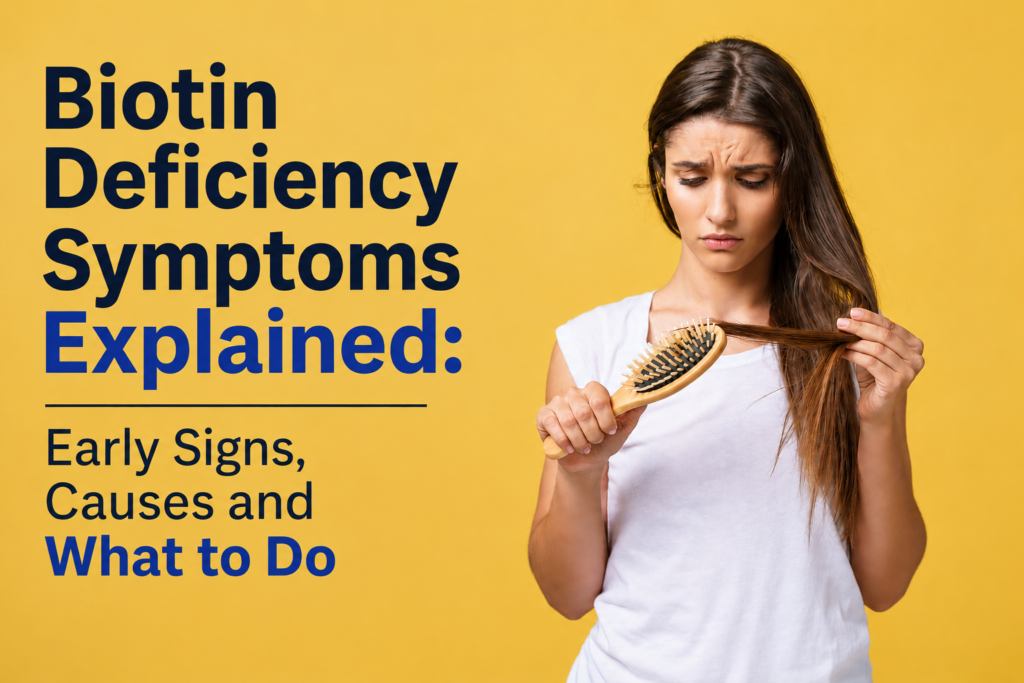
Finding more hair than usual on your comb, noticing that your nails break easily, or developing an unexplained rash can make you wonder whether your body is missing an important nutrient. These changes are sometimes included among the biotin deficiency symptoms, although they can also occur because of low iron, thyroid conditions, stress, hormonal changes or other nutritional gaps.
Biotin deficiency is uncommon in people who eat a varied diet, and its signs generally develop gradually. Hair thinning, brittle nails and a red, scaly rash around the eyes, nose or mouth are among the better-known symptoms. More serious deficiency can also affect the nervous system, leading to tingling, unusual tiredness or mood changes.
Recognising the broader pattern matters more than identifying one symptom in isolation. This guide explains the early and advanced signs of biotin deficiency, who may be at greater risk, and what steps to take when the symptoms seem familiar.
What Are the Main Symptoms of Biotin Deficiency?
Common biotin deficiency symptoms include thinning hair or increased hair loss, brittle nails, and a red, scaly rash around the eyes, nose or mouth. Some people may also experience fatigue, lethargy, or tingling in the hands and feet.
In more serious cases, mood changes and other neurological symptoms can appear. These signs usually develop gradually and are more meaningful when several occur together, especially in someone with a known risk factor for deficiency.
What Is Biotin and Why Does the Body Need It?
Biotin, also known as Vitamin B7, is a water-soluble B vitamin that helps the body convert fats, proteins and carbohydrates into usable energy. It supports enzymes involved in everyday metabolism, allowing cells to process nutrients and carry out their normal functions.
This role helps explain why low biotin levels can affect several tissues at once. Hair and nails depend on healthy protein metabolism and regular cell renewal, while the skin needs adequate nutrition to maintain its normal barrier and appearance. Biotin also contributes to processes that support the nervous system, which is why a more serious deficiency may cause tingling, lethargy or changes in mood alongside visible hair and skin symptoms.
Adults need an adequate intake of around 30 mcg of biotin each day. Most people obtain enough through a varied diet, which is one reason true biotin deficiency remains uncommon.
What Are the Early Signs of Biotin Deficiency?
The early signs of biotin deficiency usually develop gradually and often affect more than one part of the body. Common biotin deficiency symptoms in women involve the hair, nails and skin, although each of these changes can have other causes.
Hair Thinning and Increased Shedding
Low biotin levels may cause hair to become finer or shed more than usual. In severe deficiency, hair loss can become widespread, but this is uncommon. Thinning hair is among the recognised signs of deficiency. Hair fall on its own cannot confirm the problem, especially because iron deficiency, thyroid disorders, stress and hormonal changes are far more common explanations.
Brittle, Weak or Splitting Nails
Nails may become thinner, peel at the edges or break more easily. Biotin deficiency can contribute to brittle nails, but repeated contact with water, cleaning products, iron deficiency and thyroid conditions can cause similar changes.
Red or Scaly Skin Around the Face
A red, scaly rash around the eyes, nose or mouth is a more characteristic sign than general dryness or dull-looking skin. This pattern is usually seen around facial openings. An occasional dry patch is less suggestive, especially without other symptoms or a known risk factor.
Persistent Tiredness or Low Energy
Some people with low biotin may feel unusually tired or lethargic. Fatigue is highly nonspecific and can arise from poor sleep, anaemia, thyroid problems, infection or many other causes. These early signs of biotin deficiency become more meaningful when several appear together and the person also has a reason to be at risk.
Which Symptoms May Suggest a More Serious Deficiency?
When biotin deficiency becomes more pronounced, the symptoms may extend beyond the hair, skin and nails. Some people develop tingling or numbness in the hands and feet, muscle discomfort, weakness, unusual lethargy or noticeable changes in mood. Depression, hallucinations and paresthesia (abnormal skin sensations, commonly described as tingling, prickling, “pins and needles,” numbness, or a burning, itching, or crawling feeling) are among the neurological findings reported in adults with deficiency.
Conjunctivitis, which causes redness and irritation of the eyes, may occur alongside the characteristic facial rash. If the deficiency continues untreated, neurological symptoms can become more serious. Peripheral nerve symptoms, cognitive changes and seizures can be observed in severe cases, although such complications are rare and are more likely in profound deficiency or inherited disorders affecting biotin metabolism.
These symptoms should not be treated as routine beauty concerns or managed solely by starting a hair supplement. Seek medical advice promptly when hair or skin changes appear alongside tingling, marked weakness, seizures or changes in mood, behaviour or mental state. A clinician can assess whether biotin is involved and check for other nutritional, neurological or medical causes that may require attention.
Who Is More Likely to Develop a Biotin Deficiency?
Biotin deficiency is rare in people who eat a varied diet because the vitamin is present in many everyday foods. Risk rises when the body receives too little biotin, cannot absorb it properly, or processes it differently because of medication or illness.
People who take anticonvulsant medicines for a long time may have lower biotin levels because some of these medicines alter the way the body uses the vitamin. Prolonged antibiotic use may also increase risk by disturbing intestinal bacteria involved in biotin availability. Digestive conditions that cause poor absorption, including severe malabsorption or short bowel syndrome, can make it harder to obtain enough from food. Deficiency has also occurred in people receiving long-term intravenous nutrition without adequate biotin.
Severe food restriction, undernutrition and frequent consumption of large amounts of raw egg white can contribute as well. Raw egg white contains avidin, a protein that binds biotin and reduces its absorption. Normal amounts of cooked egg do not create the same concern because cooking deactivates avidin.
Pregnancy may alter biotin metabolism, while breastfeeding increases the recommended daily intake from 30 to 35 mcg. This does not mean that every pregnant or breastfeeding woman needs a separate supplement, although dietary adequacy deserves attention. A rare inherited disorder called biotinidase deficiency prevents the body from recycling biotin effectively. It usually appears in infancy or childhood and is quite different from the mild nutritional concerns most adults experience.
Is Your Hair Fall Really Caused by Biotin Deficiency?
Hair fall is common, while true biotin deficiency is rare in people who eat a varied diet. Finding more hair on your brush may lead you to suspect low biotin, yet the same change can appear with iron deficiency, thyroid problems, hormonal shifts, illness, stress or other nutritional concerns. The surrounding symptoms and personal risk factors often provide more useful clues.
concerns. The surrounding symptoms and personal risk factors often provide more useful clues.
Possible cause | Other clues that may appear |
Brittle nails, a red or scaly rash around the eyes, nose or mouth, tingling, neurological symptoms or a known risk factor | |
Fatigue, pale skin, breathlessness, heavy periods and low ferritin on testing | |
Changes in weight, sensitivity to heat or cold, menstrual changes, dry skin and altered energy levels | |
Slow wound healing, reduced taste or smell, skin changes and poor nutritional intake | |
Fatigue, weakness, numbness, pins and needles, or changes involving the mouth and tongue | |
Gradual patterned thinning, a widening part, family history, PCOS or changes around menopause | |
Diffuse shedding that begins several weeks or months after fever, illness, childbirth, weight loss or severe stress |
Pl. note: This table can help you notice patterns, though it cannot confirm the cause of hair fall. Persistent shedding, patchy loss, scalp irritation or hair changes accompanied by fatigue, menstrual changes, numbness or weight changes deserve medical assessment. A doctor may review your diet, medications and health history before recommending blood tests or treatment.
What Should You Do If You Suspect a Biotin Deficiency?
Start by considering whether you have a genuine risk factor, such as a highly restricted diet, an absorption disorder, long-term use of certain medicines or frequent consumption of raw egg whites. Look at the overall pattern of symptoms as well. Hair fall or brittle nails alone can have many causes, while several symptoms appearing together may deserve closer attention.
You can improve your dietary intake through cooked eggs, nuts, seeds, legumes, fish and vegetables such as sweet potatoes. Avoid eating large amounts of raw egg white regularly because it contains avidin, a protein that binds biotin and reduces its absorption. Cooking deactivates avidin.
Speak with a doctor when symptoms persist, become worse or include tingling, marked weakness or changes in mood or mental state. A healthcare professional can also check for more common causes such as iron deficiency or thyroid problems. Consider a supplement when your diet is inadequate, a risk factor is present or professional advice supports its use.
When Should Women Consider a Biotin Supplement?
A biotin supplement for women may be worth considering when the diet is highly restrictive, food intake has been poor for an extended period, or a recognised risk factor makes deficiency more likely. Supplementation may also be appropriate when a healthcare professional reviews the symptoms, diet and medical history and suspects that biotin intake is inadequate.
Some women may be looking for broader nutritional support rather than treatment for a confirmed deficiency. In that situation, a biotin supplement for skin and hair may be useful when it combines biotin with other relevant nutrients, such as iron, zinc, amino acids and antioxidant vitamins. The full formulation matters because hair fall, brittle nails and skin changes rarely depend on biotin alone.
A supplement should never delay the investigation of persistent, sudden or patchy hair loss. It makes sense to identify the cause early, since appropriate treatment depends on the type of hair loss. Women who take regular medicines, have digestive conditions, or are pregnant or breastfeeding should also seek professional advice before starting a new supplement.
When Should Women Consider a Biotin Supplement?
A biotin supplement for women may be worth considering when the diet is highly restrictive, food intake has been poor for an extended period, or a recognised risk factor makes deficiency more likely. Supplementation may also be appropriate when a healthcare professional reviews the symptoms, diet and medical history and suspects that biotin intake is inadequate.
Some women may be looking for broader nutritional support rather than treatment for a confirmed deficiency. In that situation, a biotin supplement for skin and hair may be useful when it combines biotin with other relevant nutrients, such as iron, zinc, amino acids and antioxidant vitamins. The full formulation matters because hair fall, brittle nails and skin changes rarely depend on biotin alone.
A supplement should never delay the investigation of persistent, sudden or patchy hair loss. It makes sense to identify the cause early, since appropriate treatment depends on the type of hair loss. Women who take regular medicines, have digestive conditions, or are pregnant or breastfeeding should also seek professional advice before starting a new supplement.
How to Choose the Best Biotin Supplement for Women
When choosing the best biotin supplement for women, begin with the full composition rather than the largest number on the front of the pack. Check whether the label clearly states the amount of biotin per serving and whether the product contains biotin alone or combines it with other nutrients. The adult adequate intake for biotin is around 30 mcg a day, although individual needs can vary.
The best biotin tablets for hair growth may also include ingredients that support the wider nutritional needs of hair, skin and nails. Iron and zinc can be relevant to normal hair health, while amino acids such as methionine and cysteine-related compounds support keratin structure. Vitamins C and E provide collagen and antioxidant support, and B vitamins contribute to normal energy metabolism.
Vāyas Life Hair, Skin & Nails follows this broader approach. It provides 30 mcg of declared biotin along with Sesbania grandiflora, iron, zinc, magnesium, amino acids, antioxidant vitamins and botanical extracts. This may suit women looking for more than a plain biotin tablet.
Before choosing any product, check the serving directions, daily suitability and possible duplication with other supplements. Women already taking iron, zinc or a multivitamin should review their combined intake with a healthcare professional.
What to Check Before You Buy Biotin Tablets Online
Before searching for biotin tablets online in India, read the full composition panel rather than relying on the claims on the front of the pack. Check the declared biotin dose, the quantity of every active ingredient and the recommended serving size. A product containing iron, zinc or other vitamins may overlap with supplements you already use, so review the combined daily intake.
When you buy biotin tablets online, confirm the manufacturer’s details, FSSAI licence number and seller authenticity. You can use the FSSAI FoSCoS portal to check licence information. The best biotin tablets should also provide clear directions, warnings and suitability information. Avoid choosing a product only because it advertises a very high dose, and purchase through the brand’s website or an authorised seller whenever possible.
Recognising the Signs and Choosing the Right Support
Biotin deficiency is uncommon, and hair fall or brittle nails alone do not confirm it. Look at the full pattern of symptoms, consider possible risk factors, and seek medical advice when changes persist or appear alongside fatigue, tingling, weakness or a facial rash.
When broader nutritional support is appropriate, choose a formula that looks beyond biotin alone. Vāyas Life Hair, Skin & Nails combines 30 mcg of biotin with iron, zinc, amino acids, vitamins, antioxidants and botanical extracts, making it a practical option for women seeking more complete support for hair, skin and nails.
Frequently Asked Questions
Can hair loss be the only sign of biotin deficiency?
Hair loss can occur with biotin deficiency, but it is rarely enough to confirm the problem on its own. Iron deficiency, thyroid disorders, stress, hormonal changes, and recent illness are more common causes and may require medical evaluation.
What does a biotin deficiency rash look like?
A biotin deficiency rash is typically red and scaly and often appears around the eyes, nose, or mouth. General dryness or occasional irritation is less specific, especially when no other symptoms or risk factors are present.
Can a blood test confirm biotin deficiency?
Routine blood tests do not always give a complete answer. Doctors usually consider symptoms, diet, medicines, and risk factors together, and may also test for more common causes such as iron deficiency, thyroid problems, or low Vitamin B12.
How long does recovery from biotin deficiency take?
Recovery depends on the severity and cause of the deficiency. Energy or skin symptoms may improve sooner, while visible changes in hair and nails can take several weeks or months because both grow slowly.
What is the best biotin supplement for women?
The best biotin supplement for women should match their nutritional needs and clearly disclose its ingredients. Vāyas Life Hair, Skin & Nails combines biotin with iron, zinc, amino acids, vitamins, antioxidants, and botanical extracts for broader daily support.
Recent Articles
-
Best Garmin Watch Bands in India: Top Brands, Styles and Buying Tips (2026)
-
Six Carts, One Habit: Buy the Gift Card First
-
Wedding Card Material Supplier in Delhi Quality Materials for Premium Invitations
-
Amazfit Chargers: Types, Features and How to Choose the Right One
-
When to Call a Home Visit Doctor in Mauritius